Bruce J. Host Northeast Branch Library Project - Native Plant and Wildflower Demonstration Garden

Bruce J. Host Northeast Branch Library Project - Native Plant and Wildflower Demonstration Garden Rosalynn Carter Monarch Butterfly Trail Extension to Tallahassee

By Veronica Donnelly

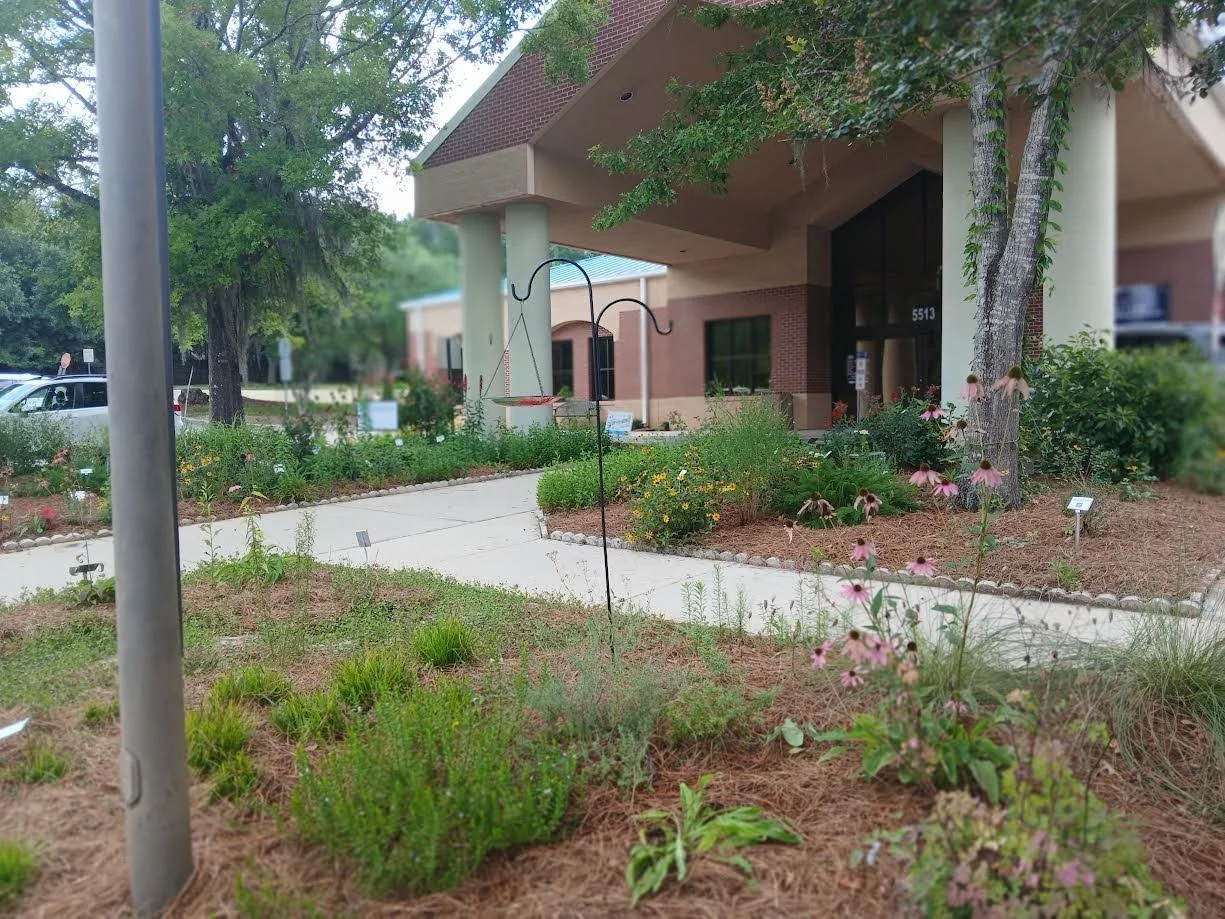
Tallahassee Garden Club, Babies Breath Circle, is striving to assist in local habitat improvement and environmental education via its native plant and wildflower demonstration garden at the Bruce J. Host Library, 5513 Thomasville Road, Bradfordville, Florida. Since receiving a Plant America Grant in 2023, the garden and plant identifier signs have been well received by the public. As a result, the circle expanded the project through a Ben Fusaco Grant from the Apalachee Audubon Society and a Library Wildflower Demonstration Grant from the Florida Wildflower Foundation in 2024.

The application for the Ben Fusaco Grant helped the circle identify current needs for the garden expansion and narrowed the 2024 focus to additional native plantings and freshwater basins to encourage native birds, butterflies and other pollinators to use the area. The grant award gave the circle funds needed for these improvements, plus advice and counsel from Donna Legare, former owner of Native Nurseries..

Donna’s knowledge and work with the circle helped with the selection and location of the new plants purchased from Native Nurseries. Numerous consultations with her reduced the number of trial and error experiences usually suffered by novices attempting to create wildlife habitats. Her suggestions on birdbaths, stepping stones, and hardscape maintenance greatly contributed to a successful expansion. Donna’s skill in anticipating how plants will grow, spread, reseed, and fill the area will continue to be appreciated in the years to come.

The Florida Wildflower Foundation awarded Tallahassee the Pilot Library Wildflower Demonstration Garden for the Northwest Florida Region, one of three regional grants in the state. Marina Mertz from the foundation, advised and assisted with the purchase and maintenance of the garden area allocated to this project. Marina’s expertise, excitement, and teachings were well received and she continues to assist with the four year commitment to the program.

In 2025, the Tallahassee Garden Club generously donated funds to double the size of the garden so that it filled the entire area the library allows the circle to use for the project. This donation enabled the circle to buy more plants,water features, and garden structures. Identifier signs were upgraded; soil and mulch were added.  

Over the last two years, all of the garden improvements have caused an increase in native bees, birds, and butterflies at the site.The number of butterflies of various species in the garden has increased fivefold. This change in the surroundings inspired the circle to apply for, and obtain, registration as a public garden on the Rosalynn Carter Monarch Butterfly Trail. Prior to registration, the trail stopped in Thomasville, Georgia, before arriving at St.Marks.Other types of butterflies are being encouraged to the area as well, due to a careful selection of host plants.

The circle seeks to motivate library patrons to learn about native plants from our posted placards with common and Latin plant names,and QR codes. These codes are tied to our website page on the Florida Wildflower Foundation site and are meant to persuade neighbors to add plants they enjoy to their own yards. Many visitors have confessed to using some of the native plant choices in their own backyards, thanks to the library demonstration garden.

Native Nurseries has inspired and promoted this community project. The circle and The Tallahassee Garden Club, Inc., are indebted and thankful for the help. We have received an exceptional, hands-on education about native plants, regional ecology, and conservation. As undeveloped lands close to the library are developed, the demonstration garden will gain greater importance in local education about the unique ecology and biodiversity of North Florida and the need for native plantings in our own backyards.
Palms: Florida’s Foundation

Many palms seen in landscapes around town are not native to Florida–some are not even palms at all. Windmill, jelly, Pindo, and fan palms are just a few that do not naturally grow here. The popular Sago palms are actually cycads, a prehistoric clade of plants that are more closely related to pines and yews than they are true palms. Yet, they are also distinct from trees. True palms flower and do not have a woody trunk. If you’ve ever seen the cut stump of a palm, you’ll notice it does not contain the distinct sections as a tree does–there is no outer layer of bark or solid rings that indicate the passing years. There is simply a mass of rough, uniform fiber. This is because palms are structurally more similar to grasses, sharing some of their closest ancestry with grasses, lilies, and onions.

All palms are incredibly tolerant and can adapt to some of the widest ranges of environments. Most are salt tolerant, often found right up against the Gulf or in salt barrens where they are inundated by periodic flooding by ocean water. Their extensive roots help with erosion control on slopes and beaches, while their evergreen foliage can act as a reliable privacy screen or hedgerow.

The fibrous trunk of palms gives them incredible flexibility, making them ideal for areas that have the potential to experience extreme winds, as they bend without breaking. They can take all day, blue-blazing sun but can also be found quietly peppering forest floors where they get little light at all. I have seen them flourish in clay, sand, soils that are poor and dry, soils that are constantly mucky and sulfuric, and everything in between. It’s this resilient nature that sees them planted in some of the harshest landscapes that our state has to offer, both in natural environments and our home habitats. 

Despite all this, palms thrive. They flower white- or cream-colored blooms that hang on long flower spikes one to two feet long. These blooms attract a myriad of tiny sweat bees, flower flies, moths, butterflies, and beetles, acting as havens for native pollinators. Their fruits–usually bright orange, black, or both–are a crucial fall source of food for wildlife. 

Cabbage palms (Sabal palmetto)

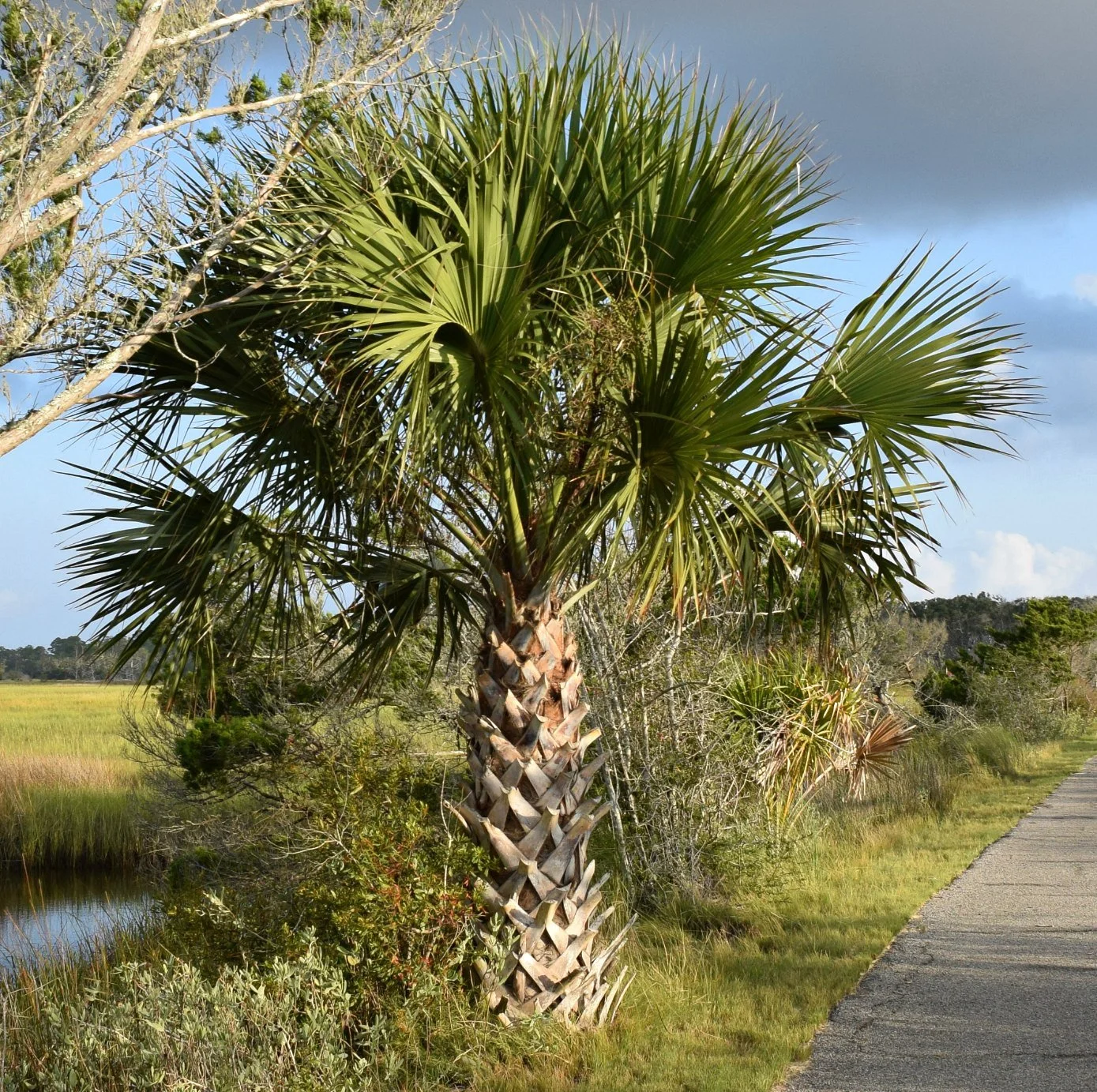
Cabbage palms (Sabal palmetto) also known as swamp cabbage, are the tallest of our native palms reaching heights of 40-50 feet with the potential to mature to 100 feet or more. When Cabbage palms are young, they resemble most other palms in silhouette before they begin their upward climb. The protrusions on the trunks of younger Cabbage palms are called boots, supposedly because the Spanish used them in lieu of shoehorns, and provide excellent miniature niches of habitat for bird nests, air plants, insects and more before they fall off as the palm matures. Early settlers would use the large palm fronds as brooms and foraged the hearts of palms for food.

Bluestem palms (Sabal minor)

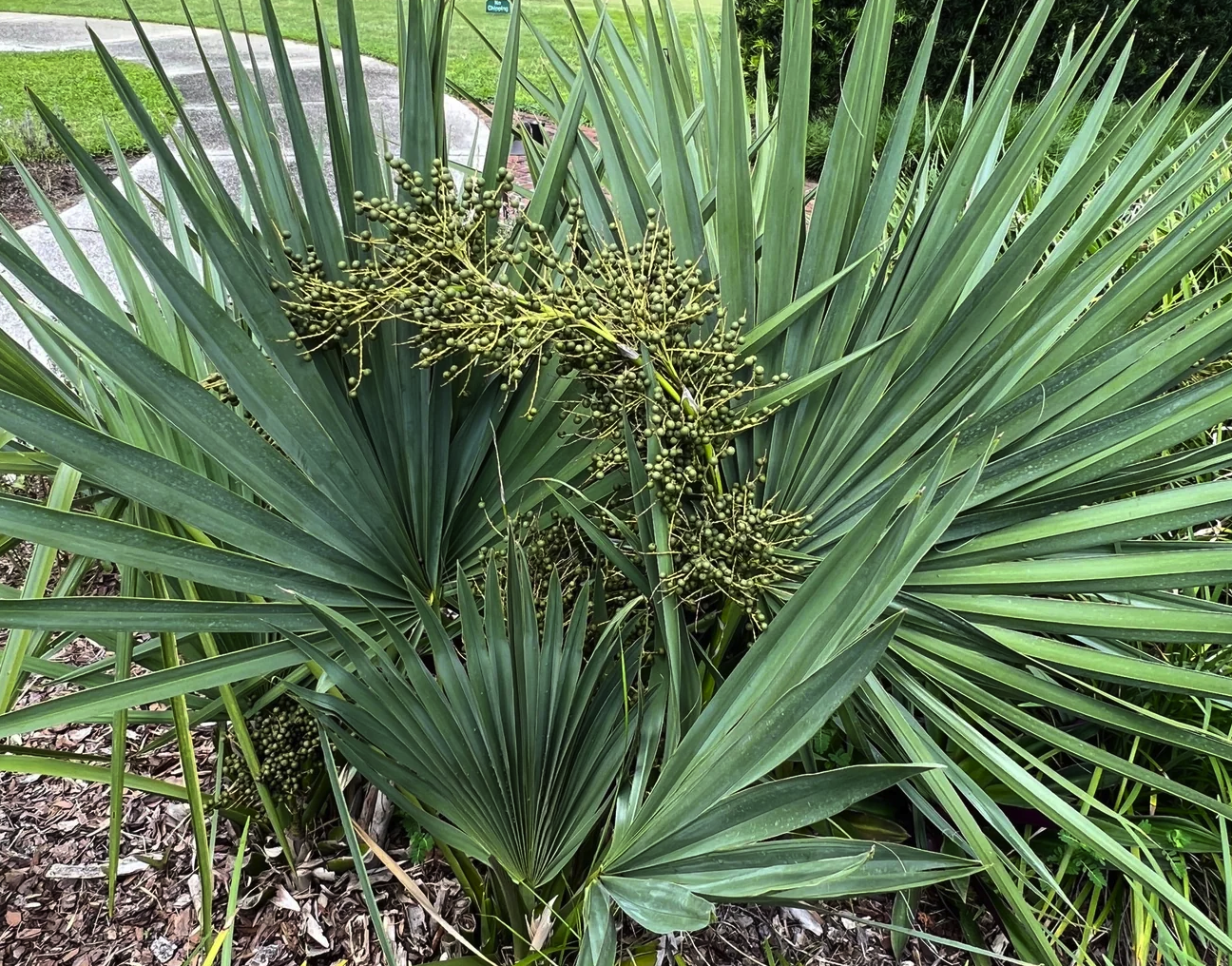
Bluestem palms (Sabal minor) are closely related to Cabbage palms but have a very different growth pattern. This palm only reaches five to ten feet in height, giving it its other common name of Dwarf palmetto. It can often be seen on river edges, in floodplains, and swamps preferring the semi-shade of the forest floor or half-sun of a tree line, though it can do well in full sun as well.

Needle palms (Rhapidophyllum hystrix)

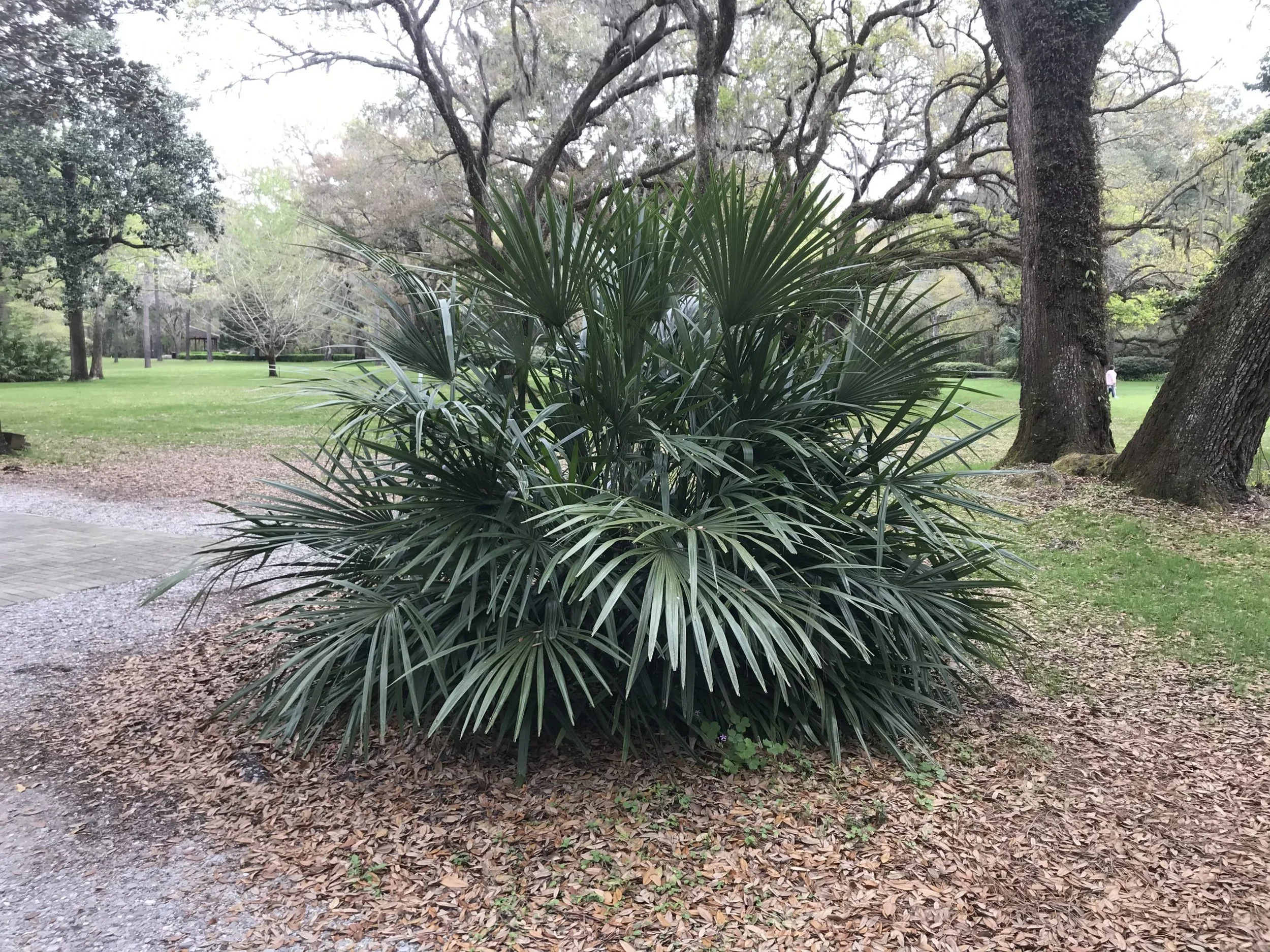
Needle palms (Rhapidophyllum hystrix) are much shorter, eventually forming a 6 by 6 foot rounded shrub. As the name suggests, this palm does have 6 to 10 inch long needles at its base and around its trunk. It is one the most elusive of our native palms, yet it has the best cold hardiness–surviving temperatures down to negative fifteen degrees. This is the only palm that has little to no salt tolerance but can handle near to full shade. The foliage of the needle palm is also the most distinct, with narrow-leaved fronds that provide an airy, fan-like texture.

Silver saw palmettos (Serenoa repens)

Saw palmettos (Serenoa repens) have toothed ridges along each leaf stem that can cause a good scrape to any exposed skin if not careful. These are the lowest growing of all our palms, usually ending up around 4 to 6 feet, though their height can vary in different environments. At St. Marks National Wildlife Refuge, it is easy to see one of the most distinctive features of truly mature Saw palmettos–their trunks swim. Instead of growing straight up, saw palmettos grow sideways, their trunks growing many hundreds of feet parallel to the ground, dipping underneath the soil and then reemerging several feet later. This method allows them to form huge colonies by breaking off from and cloning themselves. Running along the middle sandy ridge of Florida are some of the oldest Saw palmettos in existence, estimated to be between 1227-5215 years old. More than 100 bird species, 27 mammals, 25 amphibians, 61 reptiles, and many insects use it as food and habitat. When Saw palmetto extract experienced a boom in popularity for its purported medicinal properties, there was also a spike of people poaching the berries from protected lands, severely impacting bears that rely on palm forage for a chunk of their fattening fall diet.

Not everything about palms in the landscape can be praised. They are slow to grow, often a plant that requires its caretaker to be thinking in years-long terms rather than a few seasons. Adult Cabbage palms can also be rather messy–though it takes a lot to topple one, average winds or sometimes even simple wildlife activity can cause fronds to shake free from the canopy. Yet their versatility and use to our wildlife alone make them a valuable addition to any landscape, acting as a steadfast backdrop or foundation planting. It is undeniable they are a beneficial addition to the landscape, a universal symbol of the state of Florida.

May 2025, Release for the Tallahassee Democrat


Invasive vines create ecological disaster for Florida native plants

Vines can unexpectedly dominate the growing season, particularly when there are no late freezes and a warm, wet spring. If you haven't noticed yet, I encourage you to sharpen your observation skills and check your property for any rapid vine growth that may be occurring.

There are many native vines in the Tallahassee area, and most of them are only mildly aggressive, which means they can grow well alongside other plants without completely dominating the space. Additionally, these native vines are generally more compatible with large trees and rarely harm them. Therefore, it’s best to let native vines, such as grapes, smilax, Virginia creeper, passion vine, pipevine, and even poison ivy, thrive on their own whenever possible.

Our region is also home to many invasive vines, which pose significant threats to local ecosystems. Notable aggressive species include Old World climbing fern, skunk vine, Japanese honeysuckle, English ivy, Asiatic jasmine, creeping fig, Chinese wisteria, cat’s claw, air potato, and kudzu, to name a few. These invasive vines can overwhelm herbaceous plants and shrubs and pose a serious risk to old-growth trees.

Skunk vine

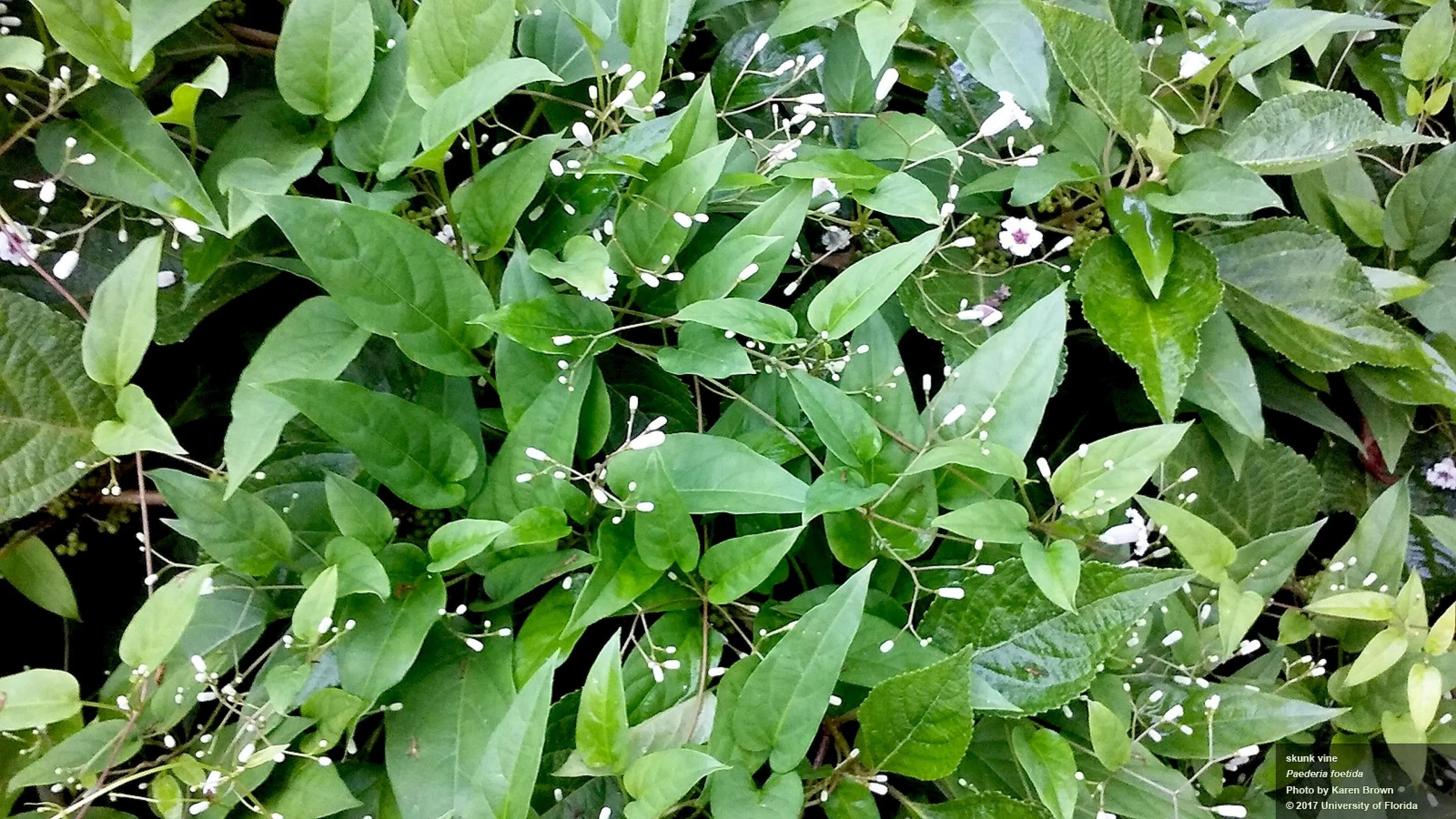
Skunk vine (Paederia foetida) is an aggressive, twining perennial vine that is spreading rapidly in residential yards and natural areas in Leon County. When you crush the leaves, they emit a foul odor, which is how it got its name. Young vines can easily be overlooked, as their green leaves blend in with the surrounding vegetation of shrubs or trees.

It becomes more noticeable when it is in bloom mid-summer, featuring small tubular flowers that are light grayish pink with red centers. If you spot it flowering, act quickly, as these multiple flowers will soon produce abundant shiny, light brown berries, which can be spread far and wide by birds and other browsers.

Japanese climbing fern

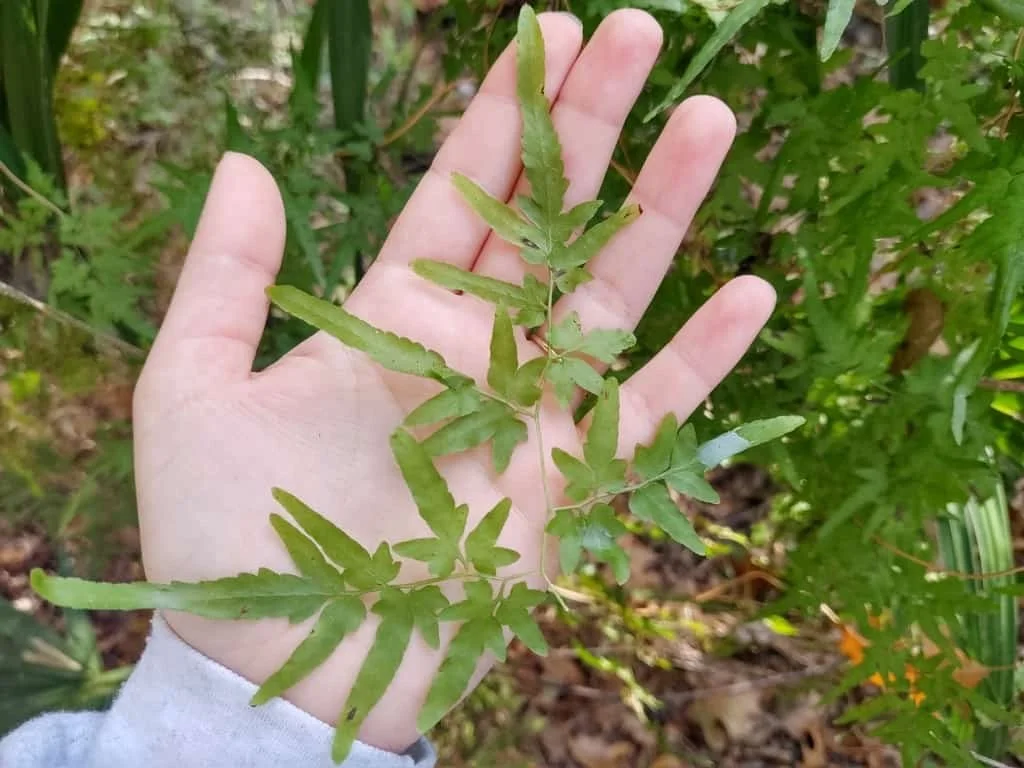
As you stroll through our local woodland parks and forests, you may also notice the Japanese climbing fern (Lygodium japonicum). Its fronds have a delicate, lacy appearance and often wind around the stems of shrubs and the trunks of trees. These vine-like ferns are highly adaptable and can thrive in various environments, whether in full sun or shade. If you decide to remove them by hand, be aware that the stems will break off easily.

Therefore, it’s crucial to dig out the entire root system and shake off the excess dirt from the roots. Once you have removed them, pile the roots and vines in an area where they can dry out and will not come into contact with the soil. Avoid removing the plant when it is releasing spores, as climbing ferns reproduce by producing numerous tiny airborne spores that can disperse through the air and grow into new plants.

Japanese honeysuckle

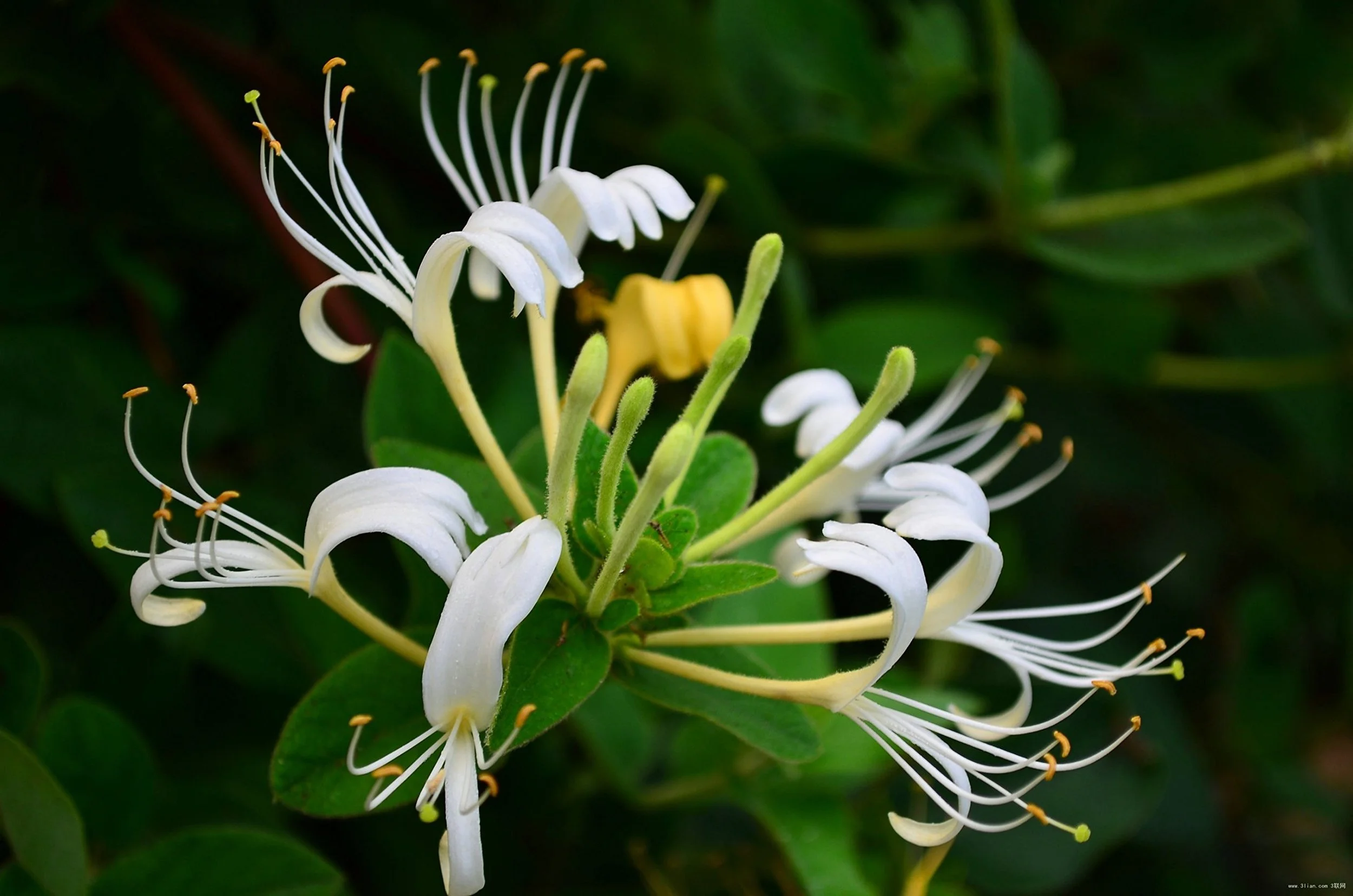
Japanese honeysuckle (Lonicera japonica) is another vine that is most easily identified in the spring, as its evergreen habit makes it one of the few vines with leaves at the end of winter. Just like skunk vine, pay special attention to the vine if it has berries on it.

This goes for most invasive vines and other plants – if it has seeds or berries, move it as little as possible and dispose of them in a trash bag on-site. A great substitution for Japanese honeysuckle is coral honeysuckle, which can be distinguished from its invasive counterpart by its flowers, which are orange or pinkish red instead of white and fragrant.

English ivy, Asiatic jasmine, creeping fig

English ivy (Hedera helix), Asiatic jasmine (Trachelospermum asiaticum), and creeping fig (Ficus pumila) are commonly found in neighborhoods and urban areas, where they have spread beyond their original landscapes and taken over the surrounding spaces. All three vines are vigorous climbers that thrive in shade and can warp or damage large deck structures and fences if allowed to grow unchecked.

Chinese wisteria

Chinese wisteria (Wisteria sinensis), with its attractive purple-lilac flowers that grace the landscape in spring, serves as a poignant reminder that aesthetic appeal can often mask detrimental ecological impacts. This species is highly invasive, capable of overwhelming native vegetation with its extensive growth. The diameter of its stems can reach up to 15 inches, posing a threat to the photosynthetic capabilities of overshadowed trees. American wisteria (Wisteria frutescens) serves as a more environmentally sound alternative.

Cat's claw

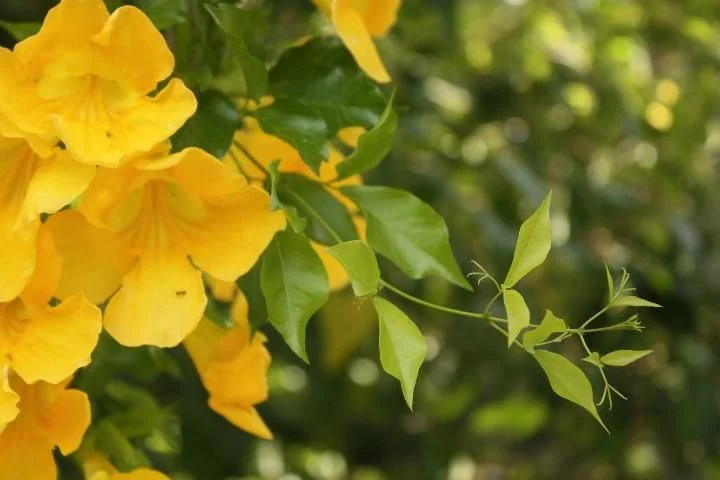
Cat’s-claw vine (Dolichandra unguis-cati) derives its name from the three-pronged "claws" it uses to climb up tree trunks, fences, and walls. If left unchecked, cat’s-claw can easily overtake and smother everything in your yard as it seeks to reach the sunlight necessary for blooming. To effectively eradicate cat's claw, begin by loosening it by gently digging down with a shovel.

Then you can grasp the stem close to the ground and pull it slowly but steadily. The plant may try to resist, and if it breaks, it can leave behind large tubers just below the surface. These remnants can sprout new vines if left unattended, so stay determined. Dig a couple of inches down, grasp the stem again, and continue pulling until you completely remove the tuber. Native crossvine or Carolina jessamine would make a great replacement for cat’s-claw vine.

Air potato vine

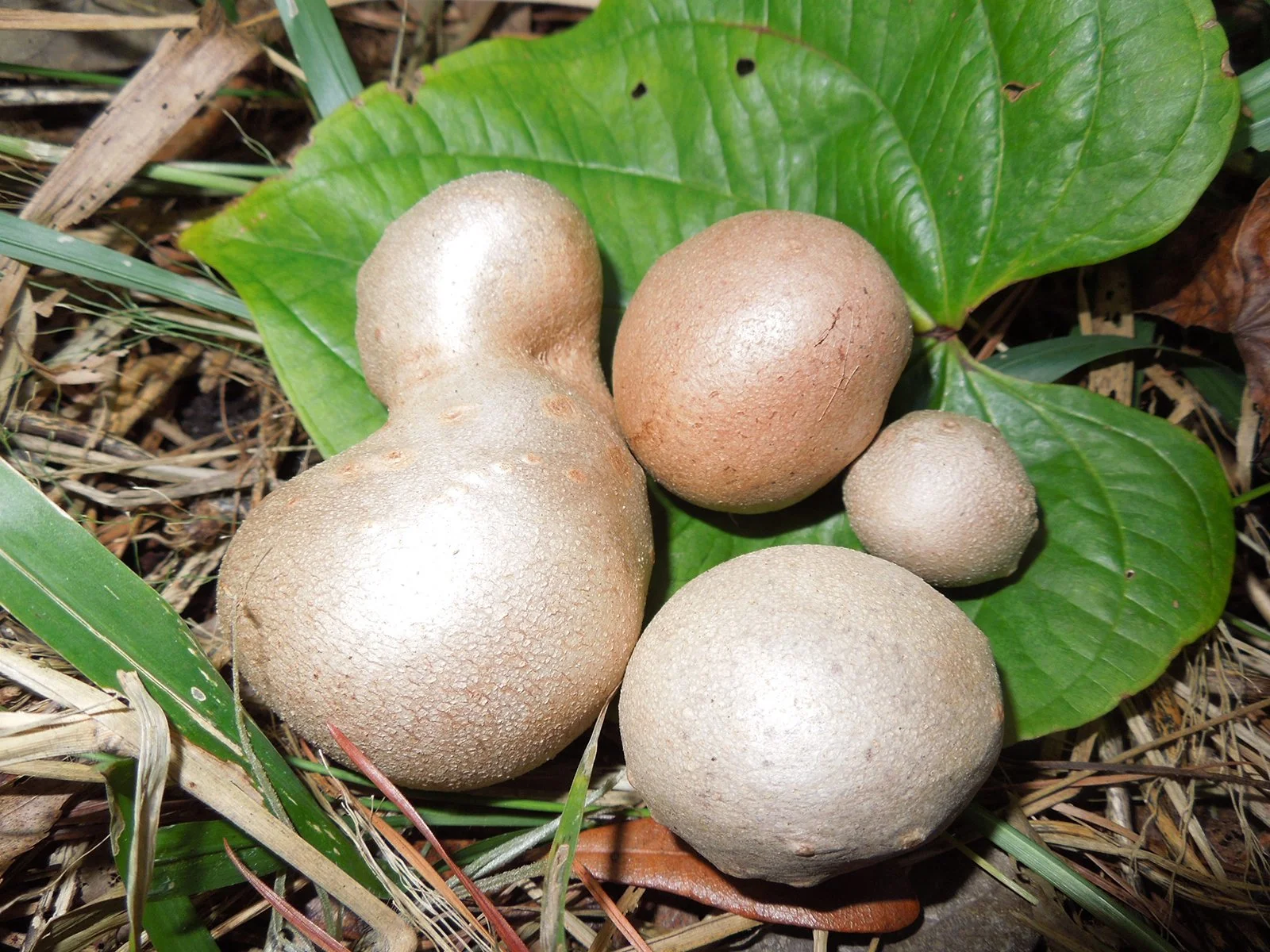
Air potato vine (Dioscorea bulbifera) has wound its way throughout Florida, from pine forests and creek floodplains to backyards. Their heart-shaped leaves are most noticeable in the spring and fall, where they can take over large areas and choke out trees and shrubs. These wild yams can grow eight inches in a single day! In the fall, the plant produces a potato-like tuber called a bulbil, which grows above ground on the vine. The bulbils drop in the winter and then produce new vines the following spring.

Kudzu

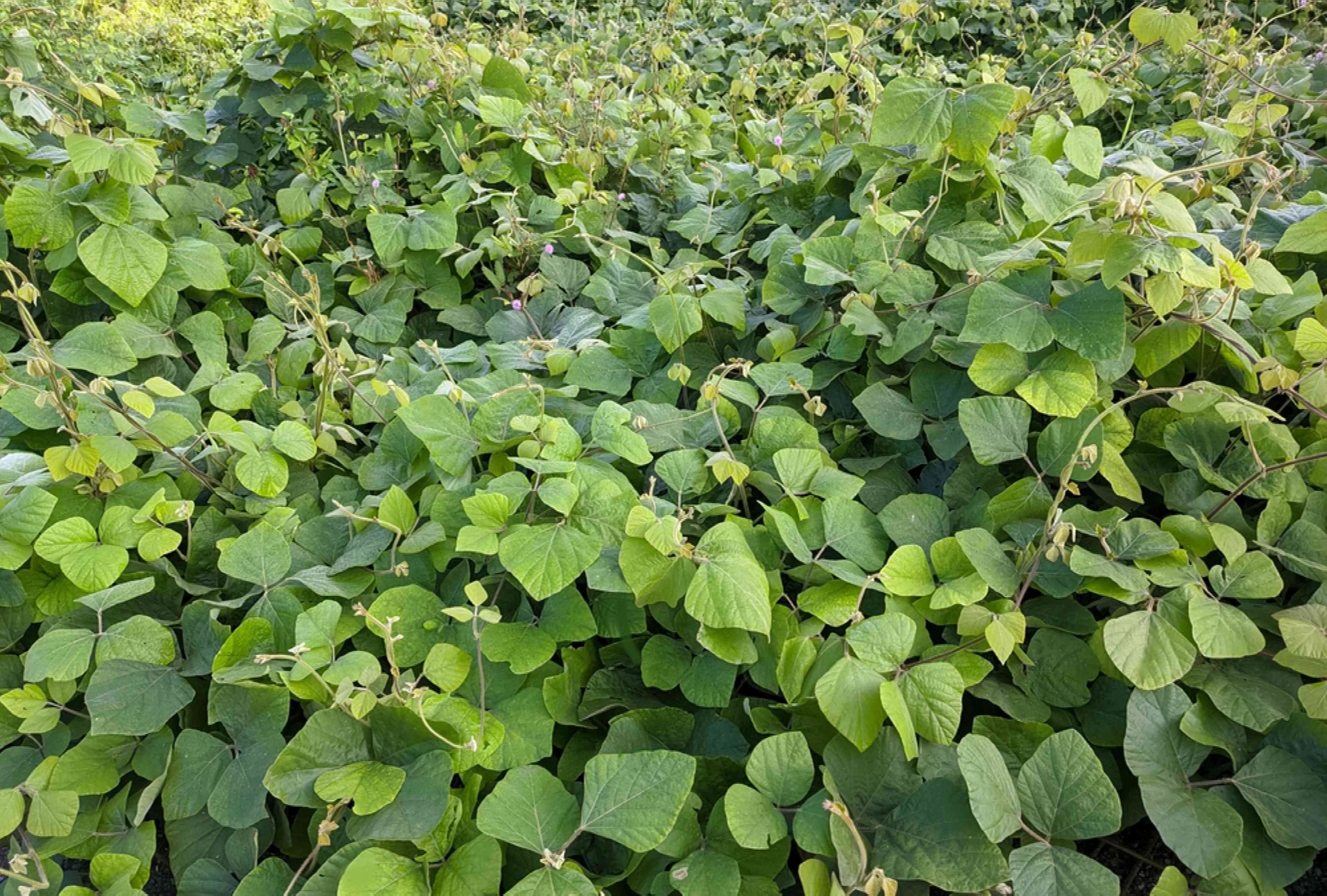
Kudzu (Pueraria montana) is one of the best-known weeds in the Southeast. Some consider it the poster child of invasive plants – “the vine that ate the South!” It grows almost anywhere and over almost anything. Entire buildings have been completely covered by this plant, and it has also been known to grow over and uproot trees.

Any vegetation it covers will soon die due to a lack of sunlight. For most vines, it’s possible to follow the plant back to its main roots, which, once removed, puts a real damper on future growth. This even goes for kudzu, although its massive size requires additional time and labor to truly beat back.

Encourage natives

Our yards and natural areas suffer a decline in biodiversity when overrun by invasive vines. The disappearance of native plant diversity leads to a corresponding loss in native insect populations, for many insects cannot digest plants that originate from different regions of the world.

This reduction in insect diversity, in turn, diminishes the variety of birds and other wildlife. To protect your yard's plants from these invasive vines, it's essential to learn to identify them early for easy removal. Prevent their spread into neighboring yards, as well as our parks and natural areas.